

TL;DR:
- Geo-IP intelligence links IP addresses to approximate geographic locations using updated databases.
- It is vital for cybersecurity, fraud detection, content localization, and geo-blocking.
- Responsible use requires balancing security benefits with privacy concerns and transparent data practices.
Every time you connect to the internet, your IP address quietly broadcasts more about you than most people realise. Your approximate city, your internet service provider, and even your browsing patterns can be inferred from a single connection. Geo-IP intelligence is the discipline of extracting and acting on that location data, and it sits at the heart of both modern cybersecurity and growing privacy debates. For businesses and security professionals, understanding how this technology works is no longer optional. It shapes fraud prevention, regulatory compliance, content delivery, and incident response in ways that affect millions of users every day.
Table of Contents
- What is geo-IP intelligence and how does it work?
- Key applications: security and threat intelligence
- Personalisation, localisation and geo-blocking
- Privacy, ethics and potential risks of geo-IP intelligence
- A perspective: are we underestimating the power and risk of geo-IP intelligence?
- Next steps: using geo-IP intelligence safely and effectively
- Frequently asked questions
Key Takeaways
| Point | Details |
|---|---|
| Geo-IP reveals more than you think | IP addresses can uncover country, city and sometimes precise location details, impacting privacy and security. |
| Security and privacy are in tension | Geo-IP intelligence aids threat detection but also raises ethical questions about how much is too much. |
| Personalisation and restrictions coexist | Geo-IP enables personalised content and access controls but can also result in unwanted geo-blocking for users. |
| Choose privacy-first practices | Using VPNs, opt-outs and transparent policies helps businesses and individuals balance geo-IP’s benefits and risks. |
What is geo-IP intelligence and how does it work?
Geo-IP intelligence is the practice of linking an IP address to a physical or approximate geographic location. As IP geolocation explained outlines, this process relies on large, continuously updated databases that map IP address ranges to countries, regions, cities, and sometimes postal codes. The result is a picture of where a device is likely located, built from data contributed by internet service providers, internet backbone operators, and commercial geolocation vendors.
The process works by cross-referencing an IP address against these databases using lookup algorithms. Geo-IP intelligence maps IPs to real-world places using a combination of registration records, routing data, and user-reported corrections. The databases are rarely perfect, but they are refined constantly through crowdsourced feedback and ISP partnerships.
Here are the core components you need to understand:
- IP address: A unique numerical label assigned to every device on a network, either IPv4 (e.g. 192.168.1.1) or the newer IPv6 format.
- Geolocation database: A structured dataset mapping IP ranges to geographic coordinates, city names, and network details.
- Data mapping: The algorithmic process of matching a live IP address to a record in the database.
- ISP data: Internet service providers register IP blocks with regional internet registries, providing a foundational layer of location information.
The table below shows how accuracy typically varies by geographic level:
| Geographic level | Typical accuracy |
|---|---|
| Country | 95 to 99% |
| Region or state | 55 to 80% |
| City | 50 to 75% |
| Postcode | 20 to 40% |
| Street address | Not reliable |
For businesses, the practical uses are significant. Streaming platforms use geo-IP to enforce licensing agreements. Banks use it to flag logins from unexpected countries. E-commerce sites use it to display local currency and promotions. Fraud detection systems use it to catch transactions that originate from high-risk regions.
Pro Tip: Never rely on a single geo-IP database. Cross-referencing two or more commercial sources dramatically improves accuracy, particularly for mobile and satellite connections where IP assignment is less predictable.
Key applications: security and threat intelligence
Geo-IP intelligence is one of the most widely used tools in a security operations centre. When an alert fires at 2 a.m. showing a login attempt from a country your organisation has never done business with, geo-IP data is what makes that anomaly visible. Security professionals use geo-IP to trace threats, though privacy advocates caution against over-collection of location data in the process.
Here is how a SOC team typically uses geo-IP data during incident response:
- Detect the anomaly: An authentication system flags a login from an unusual country or region.
- Enrich the alert: The IP address is run through a geo-IP lookup to confirm location, ISP, and whether it belongs to a known VPN or proxy service.
- Correlate with history: The team checks whether that IP range has appeared in previous alerts or threat intelligence feeds.
- Decide and respond: Based on the enriched data, the team blocks the IP range, resets credentials, or escalates to a full investigation.
- Document findings: The geo-IP data is logged for future pattern recognition and regulatory reporting.
The comparison below shows how geo-IP intelligence serves different security functions:
| Use case | Primary benefit | Key limitation |
|---|---|---|
| Cybersecurity monitoring | Rapid anomaly detection | VPNs can mask true origin |
| Fraud prevention | Flag high-risk transactions | False positives for travellers |
| Regulatory compliance | Enforce data residency rules | Accuracy gaps in some regions |
| Suspicious activity tracking | Correlate multi-region attacks | Requires behavioural data too |
For deeper guidance on applying these techniques, the IP lookup for cybersecurity resource covers practical workflows in detail.
Pro Tip: Geo-IP alone is not enough. Pair it with behavioural analytics, such as typing speed, session duration, and device fingerprinting, to reduce false positives and catch sophisticated attackers who route through local proxies.
Personalisation, localisation and geo-blocking
Beyond security, geo-IP intelligence is the engine behind much of the personalised internet experience. When a website greets you in your local language, shows prices in your currency, or tells you a product is unavailable in your region, geo-IP data is almost certainly driving that decision.

Content localisation is one of the most commercially valuable applications. Retailers use geo-IP to display region-specific promotions. News publishers use it to surface locally relevant stories. Software vendors use it to apply country-specific pricing. These are not minor tweaks; they directly affect conversion rates and customer satisfaction.
Geo-blocking is the more controversial cousin of localisation. It refers to restricting or allowing access to content or services based on a user’s detected location. Streaming services use geo-blocking to enforce content licences that differ by territory. Banks block access from certain countries to reduce fraud exposure. Some governments mandate geo-blocking to comply with local laws.
“Geo-IP data is used to control access, but this raises privacy protection concerns that organisations must address transparently.”
The benefits and drawbacks for businesses and users are worth weighing carefully:
- Benefits for businesses: Regulatory compliance, reduced fraud, improved relevance, and higher engagement.
- Benefits for users: Localised content, relevant promotions, and a more tailored experience.
- Downsides for businesses: Risk of blocking legitimate users, maintenance overhead, and reputational risk if perceived as discriminatory.
- Downsides for users: Restricted access to content, frustration when travelling, and limited transparency about why access is denied.
For a thorough breakdown of how this affects everyday browsing, geo-blocking explained is a useful starting point. The key takeaway for organisations is that geo-blocking should be implemented with clear user communication, not as a silent wall.
Privacy, ethics and potential risks of geo-IP intelligence
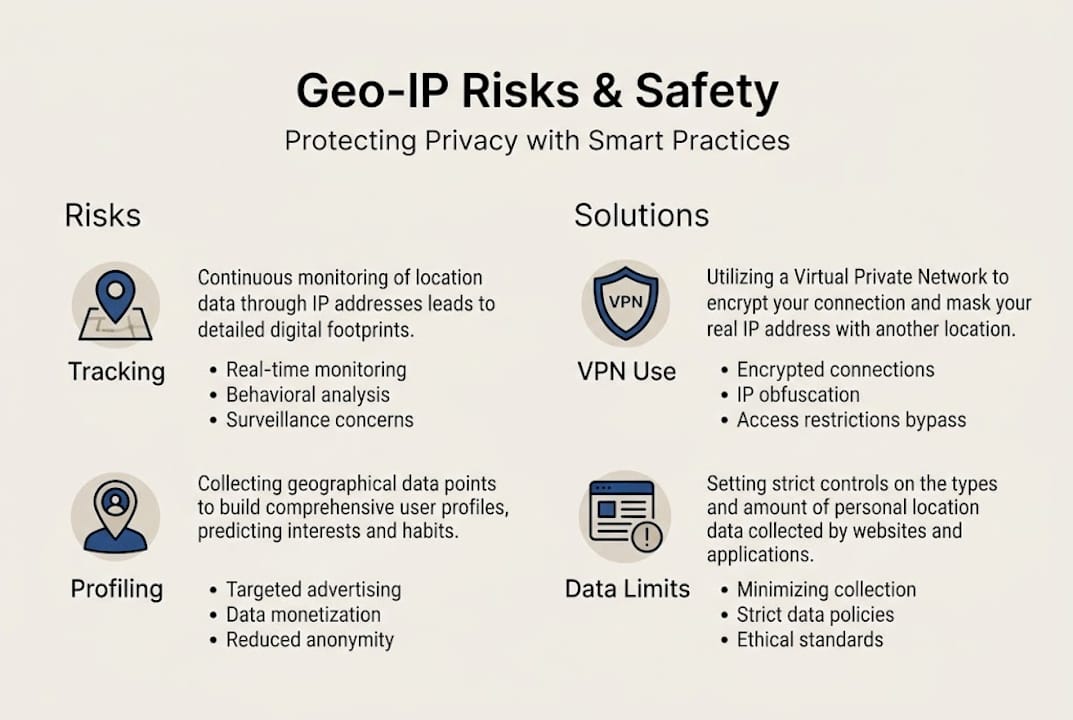
Geo-IP intelligence is a powerful tool, but its power cuts both ways. The same capability that helps a security team detect a breach can, in the wrong hands, enable persistent surveillance of individuals without their knowledge or consent.
The major privacy risks include:
- Location profiling: Repeated lookups over time can build a detailed picture of a person’s movements and habits, even without GPS data.
- Over-collection: Many organisations collect far more geo-IP data than they need, creating unnecessary risk if that data is breached.
- Third-party sharing: Geo-IP data is often shared with advertising networks, analytics platforms, and data brokers, well beyond the original collection purpose.
- Lack of transparency: Most users have no idea their IP address is being geolocated every time they visit a website.
“Privacy advocates urge minimising data collection and providing easy opt-outs for users as a baseline ethical standard.”
For individuals, practical defences exist. Using a reputable VPN masks your true IP address, replacing it with one from a different location. Proxies offer a similar effect, though with less consistency. Understanding ISP tracking and privacy is also essential, as your ISP has access to far more granular data than any geo-IP database. It is also worth checking IP geolocation accuracy so you understand what information is actually visible about your connection.
For organisations, the ethical recommendations are clear. Collect only the geo-IP data you genuinely need. Store it for the shortest time necessary. Provide users with transparent disclosures and meaningful opt-out options. Treat geo-IP data as personal data under frameworks like GDPR, because in many jurisdictions, it legally qualifies as such.
A perspective: are we underestimating the power and risk of geo-IP intelligence?
Most businesses treat geo-IP intelligence as a background utility, something that runs quietly to block a few bad actors and serve the right content to the right region. That framing is dangerously narrow. The organisations we see handling geo-IP data well are not the ones with the most sophisticated blocking rules. They are the ones that have asked a harder question: what does it mean to use location data responsibly?
The reality is that IP in business security is evolving rapidly, and the legal landscape around location data is tightening in parallel. Privacy regulations are expanding their definitions of personal data, and geo-IP data is increasingly caught within those definitions. Businesses that treat it as a simple technical tool today may find themselves facing compliance gaps tomorrow.
The smartest organisations we observe are those that balance insight with restraint. They use geo-IP data to protect users, not just to extract value from them. They communicate openly about what they collect and why. That approach builds user trust, which is a competitive advantage that no amount of data can manufacture.
Next steps: using geo-IP intelligence safely and effectively
Understanding geo-IP intelligence is one thing. Putting that knowledge to work is another. Whether you are a network administrator investigating an alert, a business owner assessing your fraud exposure, or an individual wanting to understand what your IP address reveals, practical tools make the difference.
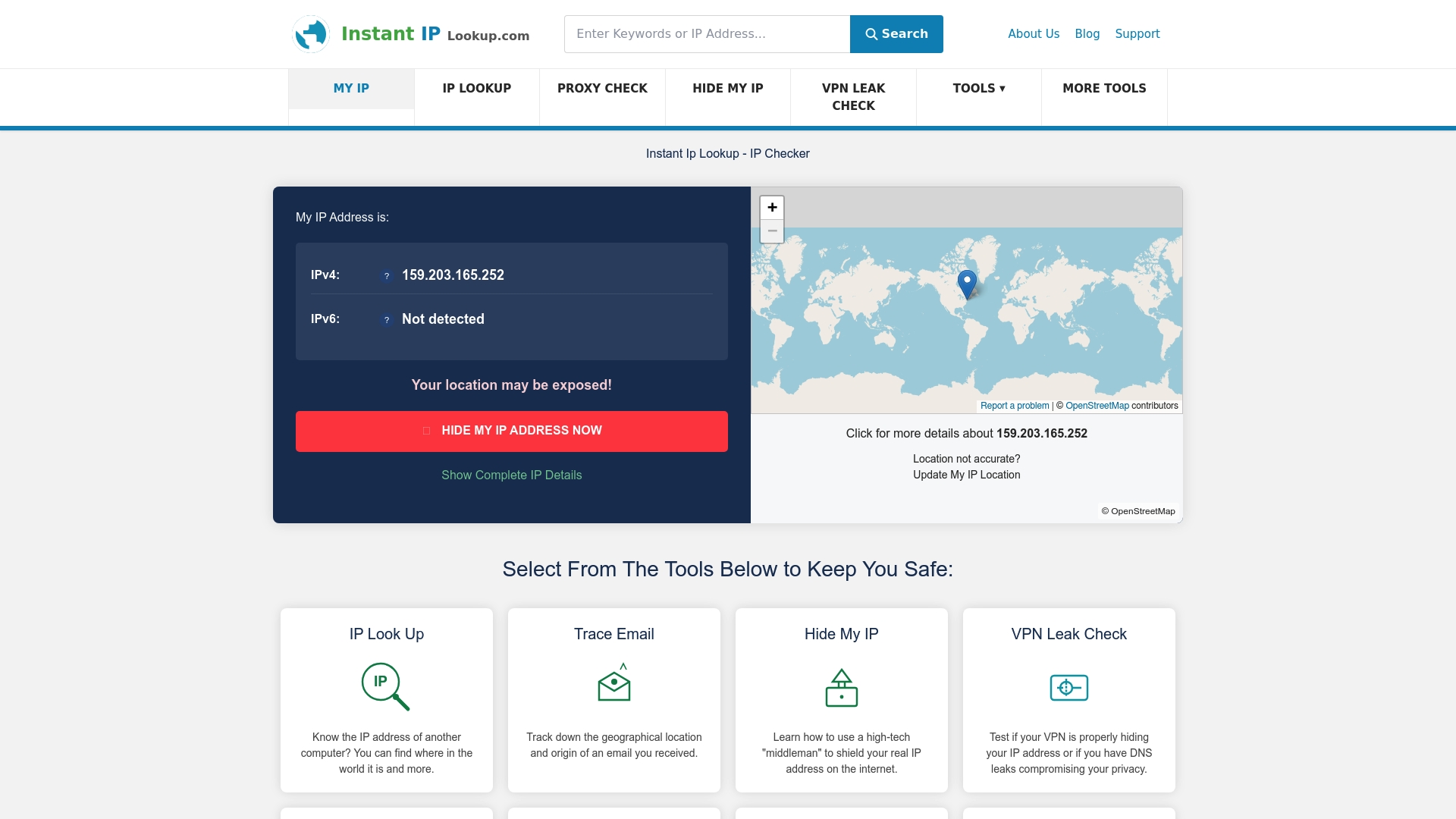
InstantIPLookup.com offers a suite of free tools designed for exactly this purpose. From running a detailed IP lookup guide for cybersecurity to using the live IP address lookup tool to see what your connection reveals right now, the platform gives you actionable intelligence without complexity. Start by checking your own IP, then explore the VPN detection and proxy testing features to see how well your current privacy measures are actually working.
Frequently asked questions
How accurate is geo-IP intelligence for locating users?
Geo-IP intelligence reliably identifies a user’s country in 95 to 99% of cases, but city-level accuracy drops significantly, and street-level identification is not dependable, particularly when VPNs or proxies are in use.
Can geo-IP intelligence increase online privacy risks?
Yes. When geo-IP data is misused, it can enable persistent location profiling or tracking without user consent, particularly when combined with other data points held by advertisers or data brokers.
How can I protect my identity from geo-IP tracking?
VPNs and proxies mask your actual IP address during geo-IP lookups, and opting out of data collection where platforms offer that choice further reduces your exposure.
Why do businesses need geo-IP intelligence?
Businesses rely on geo-IP for fraud prevention, security monitoring, content localisation, and ensuring compliance with regional regulations such as GDPR and data residency requirements.

Comments (0)